
In the bustling corridors of Sengkang General Hospital (SKH), a new team of helpers is on the job. These are the Autonomous Mobile Robots (AMRs) from Mobile Industrial Robots, a technology silently transforming the hospital’s logistical backbone and, in the process, freeing up valuable human hands to do what they do best: care for patients.
SKH plays a vital role in providing quality and accessible care to better serve the healthcare needs in North-Eastern Singapore, offering a wide spectrum of specialist clinics and delivering multidisciplinary, patient-centric care across all major healthcare disciplines. Guided by its vision, “Healthy Living. Fulfilling Life,” SKH continues to adopt advanced automation and smart-facility solutions to deliver safe, efficient, and community-oriented healthcare, particularly in response to Singapore’s ageing population.
Delivering the Solution: HoST Pte Ltd and Sonepar Singapore
To support SKH’s smart facility and automation goals, the AMR solution was delivered by HoST Pte Ltd, together with Sonepar Singapore.
Working closely with SKH, HoST and Sonepar Singapore provided the robotics expertise, system planning, and deployment support required to integrate AMRs seamlessly into the hospital’s operational environment.
This collaboration ensured the solution could scale across multiple departments while aligning with SKH’s operational, safety, and workflow requirements, laying the foundation for one of Singapore’s most significant healthcare automation initiatives.
The Challenge: A Cycle of Non-Clinical Logistics Tasks
Before the deployment of AMRs, SKH identified opportunities to improve manual transport operations due to their high frequency and resource demands. Nurses and support staff spent valuable time pushing medication trolleys, surgical instrument carts, food, and linen across multiple floors and departments.
This manual transportation model placed physical strain on staff, contributed to fatigue, and affected workflow efficiency , especially during peak hours or periods of reduced manpower. With healthcare demand expected to grow, SKH recognised the need to optimise its transportation system and redeploy skilled clinical staff toward higher-value patient care activities.
“We needed a solution that was agile and could integrate with our existing systems. The AMR’s ability to connect with Robotics Middleware for Healthcare (RoMi-H) was a game-changer and opens up the possibility of managing doors and lifts through a centralised control platform.”
Teng Jyh Lei
Deputy Director of Strategic Projects, SKH
The Solution: Deploying Autonomous Mobile Robots (AMRs)
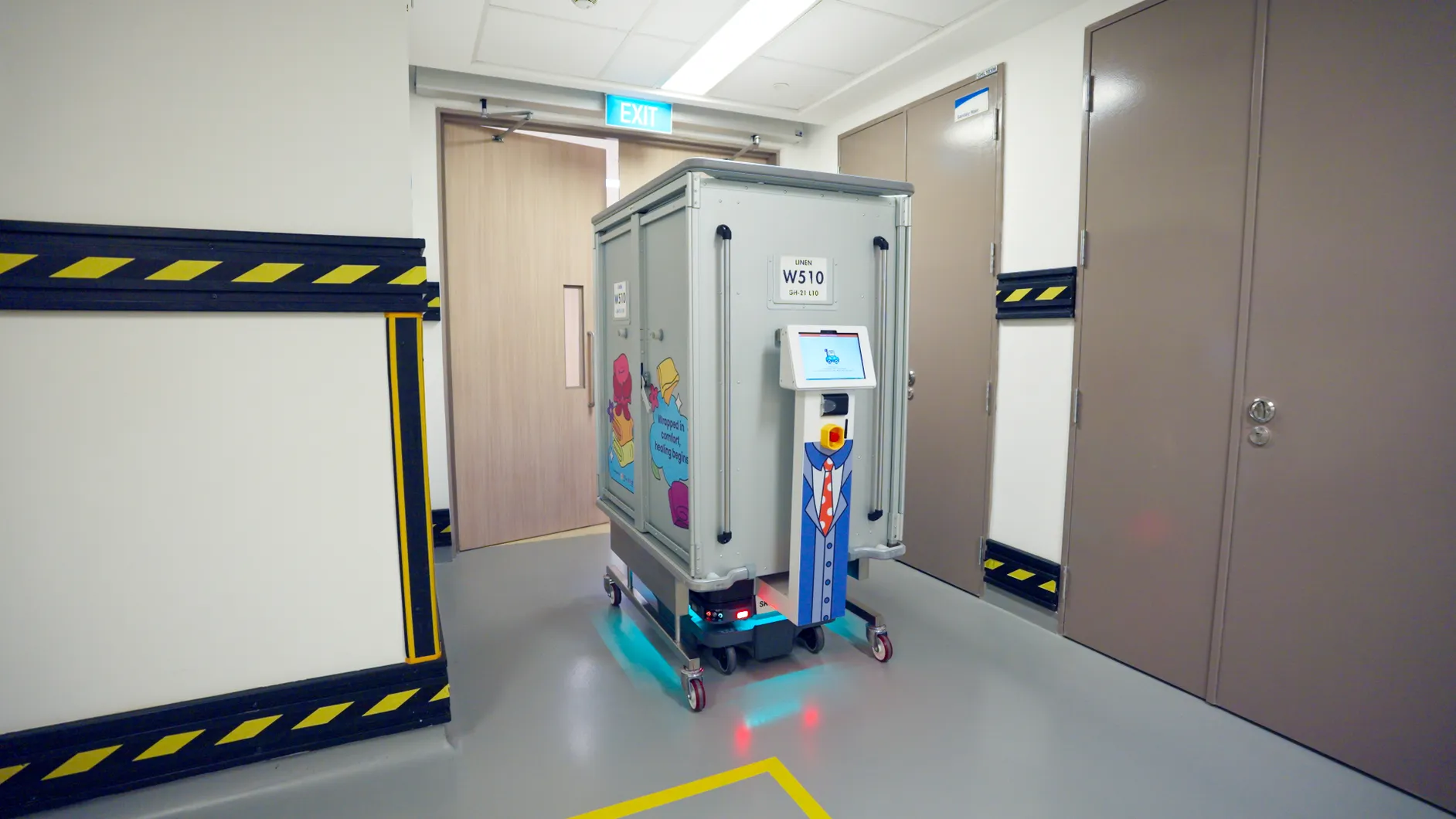
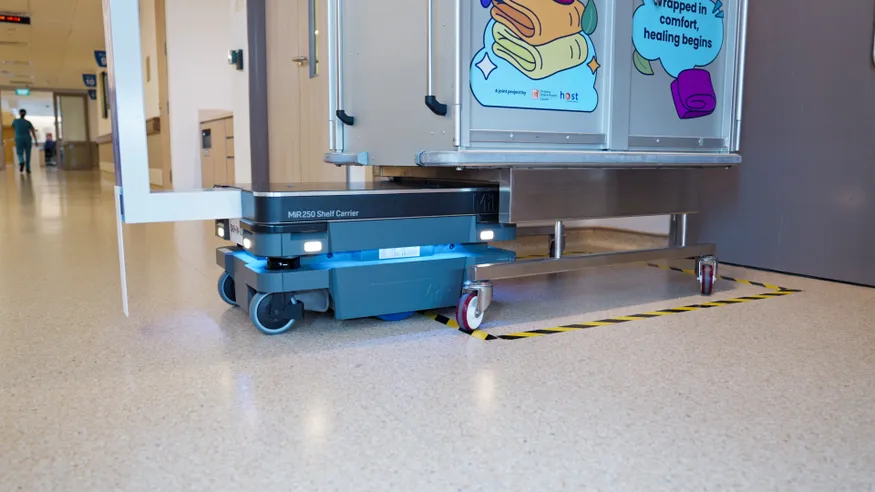
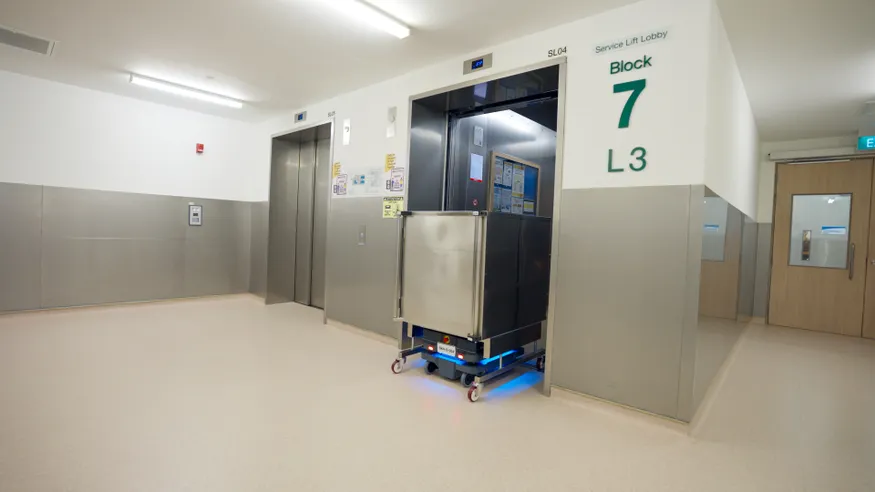
To address these needs, SKH implemented AMRs as part of its smart facility strategy. The robots feature intelligent, trackless navigation using advanced sensors, enabling them to move safely through hospital corridors without requiring major infrastructure changes.
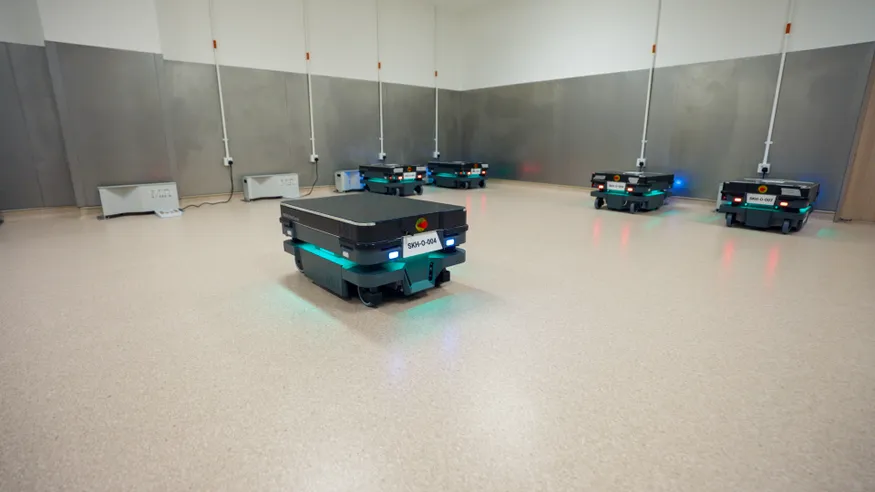
The deployment began in early 2024 and was completed in September 2025, involving a fleet of 37 MiR250 AMRs operating across four core workflows:
- Operating Theatres – Transporting contaminated instruments to CSSU and returning sterilised sets
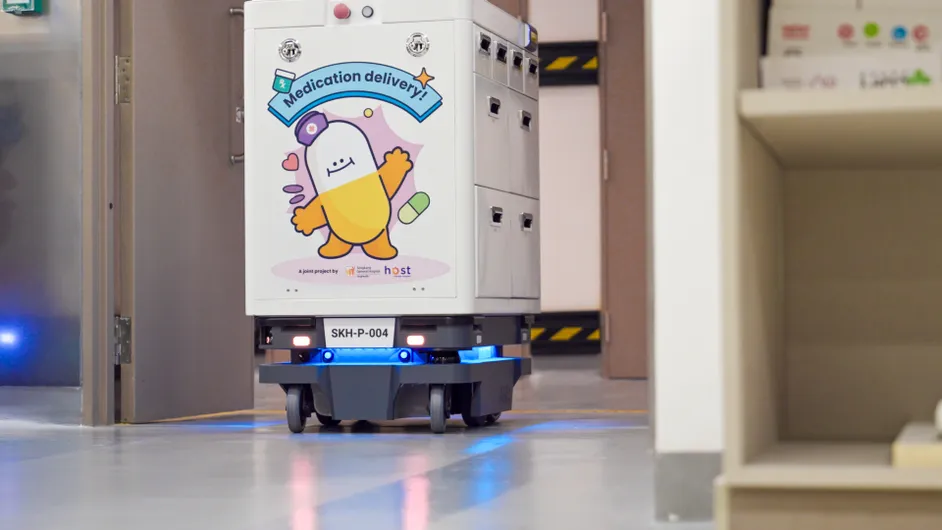
- Pharmacy – Delivering patient medications from pharmacy to wards
- Meal Delivery – Ensuring timely delivery of patient meals
- Linen – Supplying clean linen to wards
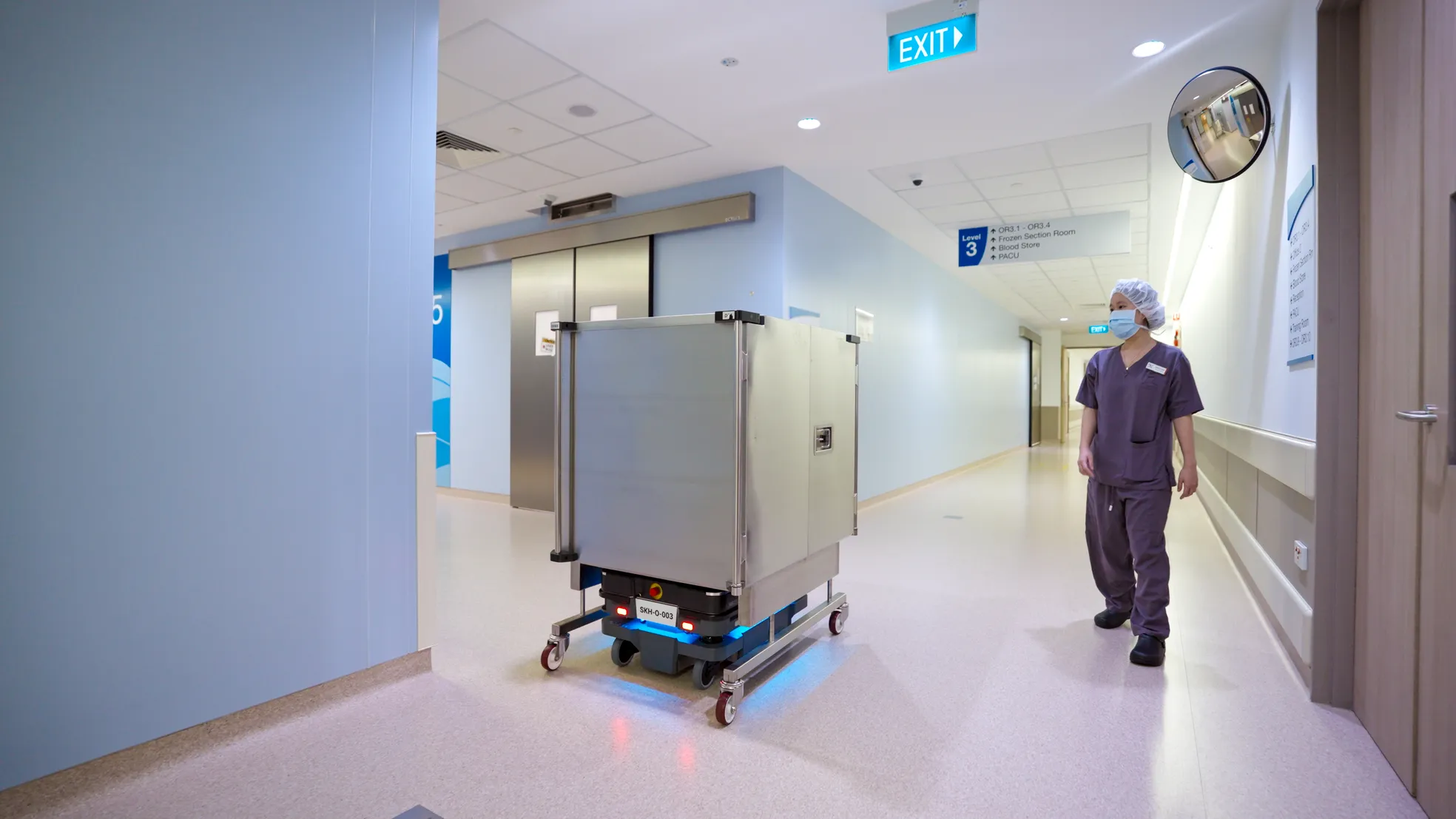
These AMRs operate around the clock, taking over physically demanding transport tasks and improving overall workflow reliability.
On the Front Lines: Impact on Daily Operations
While the strategy was planned at management level, the real impact is felt by staff working alongside the robots.
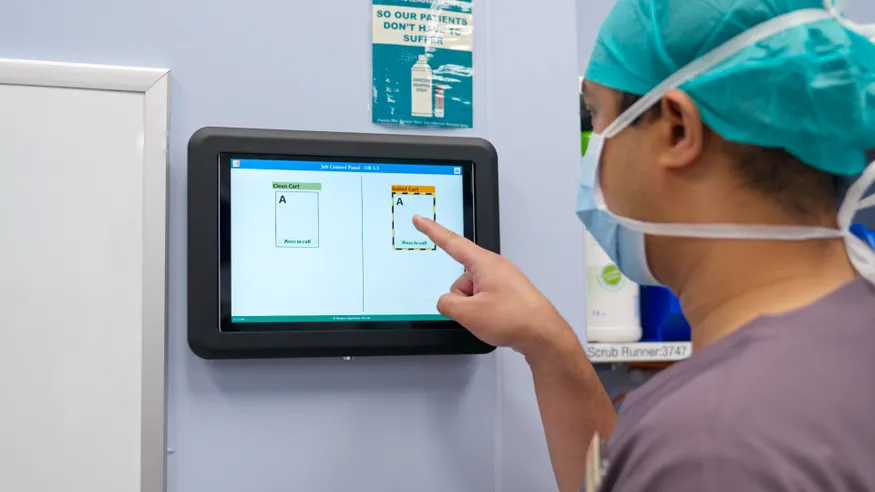
- Operating Theatre nurses now activate AMRs via tablets, eliminating manual pushing of heavy carts and reducing stress during high-pressure procedures.
- Pharmacy technicians benefit from streamlined workflows, reduced reliance on human porters, and improved accuracy in medication delivery.
- Ward nurses report improved patient comfort due to timely food delivery and more time available for patient interaction.
“We now have more instrument sets in circulation because soiled instruments are sent to CSSU immediately instead of waiting in the dirty utility room.”
Alvin Aaron Bongat
Senior Staff Nurse, SKH
The Impact: Putting Patients First
While it is still early for a full ROI assessment, the qualitative benefits are clear.
“We introduced AMRs to automate routine processes so our clinical teams can focus on patient-centred care. This also strengthens our operational resilience for future demands.”
Charity Wai
Chief Operating Officer, SKH
SKH is the first hospital in Singapore to deploy an AMR fleet of this scale, representing a major advancement in healthcare logistics automation. The success of this project demonstrates how collaboration between healthcare providers and technology partners, including HoST Pte Ltd and Sonepar Singapore, can translate innovation into real-world impact, enabling healthcare professionals to focus on what matters most: patients.